At low tide, the marsh opens like a map. Creeks braid through spartina grass, oyster shells shine in the mud, and Daufuskie sits where the water keeps its own counsel. That geography did more than shape a landscape. It helped preserve Gullah culture on Daufuskie Island, one of the clearest places in the South Carolina Lowcountry to see how language, worship, food, memory, and burial customs endured after slavery and despite everything that followed.
This is not a story about quaint isolation. It begins with forced migration and plantation labor. It continues through war, emancipation, work on the water, and a long period when the island remained reachable only by boat. On a small sea island between Hilton Head and Savannah, an English-based creole with deep West African roots survived because a community carried it, and because the mainland did not easily reach them.
An older island beneath the Gullah story
Long before plantations, people lived and moved here. Archaeological finds indicate human presence stretching back thousands of years, including early stone points often cited as evidence of visits more than 9,000 years ago. For much of that long span, the island was associated with Native peoples of the broader Muskogean cultural world.
The name itself belongs to that older history. “Daufuskie” is generally traced to Muscogee and is often translated as “sharp feather,” a phrase linked to the island’s shape.
Europeans arrived later. Spanish explorers reached this coast in the 16th century, and horses they introduced are often connected to the ancestry of the Carolina Marsh Tacky. English claims followed. The first English land grant on the island dates to the early 18th century, usually given as 1707 or 1708. During the violent years after the Yamasee War, the island’s southern end saw clashes involving Yamasee fighters aligned with the Spanish and British forces. The name Bloody Point keeps that memory in place. By the mid-1730s, most of Daufuskie had been granted for plantations.
That earlier history matters because Gullah life did not begin on empty ground. It took shape on a place already named, used, and contested.
Slavery, distance, and the making of a creole
Daufuskie first produced indigo, then Sea Island cotton. The change mattered. Cotton on the sea islands demanded large numbers of skilled laborers, and enslaved Africans were brought here in great numbers, many from the rice-growing regions of West Africa often called the Rice Coast.
Any honest account of Gullah culture has to start there. What later endured was formed under slavery, not apart from it.
Yet the plantation world of the sea islands created a particular kind of separation. White planters often left for part of the year to avoid malaria and yellow fever. Their absence did not lessen the violence of slavery, but it did create more space within enslaved quarters for African-derived practices to continue, adapt, and mingle. On Daufuskie, geography reinforced that separation. Water limited movement in and out. The result was not a sealed world, but a place where a distinct language and culture could take root with unusual strength.
That language was Gullah, an English-based creole shaped by contact among English and several West and Central African languages. It has its own grammar, sound patterns, and vocabulary. It is not “broken English,” and treating it that way misses the point. On Daufuskie Island, Gullah survived because people used it in daily life, across generations, in work, worship, and family.
Language was only one part of the cultural fabric, though “fabric” is too neat a word for something made under such pressure. Oral storytelling carried animal trickster figures, including Br’er Rabbit. Music preserved call-and-response forms in spirituals and ring shouts. Beliefs about hags, haunts, and spiritual protection echoed older African understandings of unseen forces. Herbal healing, often called granny medicine, remained part of island knowledge. So did foodways that still read clearly across the Atlantic world: rice, okra soup, hoppin’ john, red rice, gumbo.
None of this means Daufuskie preserved an untouched African past. Gullah culture was made in the Lowcountry. It was new. But its links to West Africa remained visible, and on this island they stayed visible longer than in many mainland places.
After emancipation, culture stayed rooted in land and worship
The Civil War broke the plantation order. Union forces occupied Daufuskie, and white planters fled. Emancipation changed the legal condition of Black life, but it did not sever people from the island. Formerly enslaved residents returned, acquired land in some cases, worked for new owners in others, and rebuilt community on ground their labor had long sustained.
That return is central to the history of Gullah culture on Daufuskie Island. The island did not preserve only a memory of slavery. It remained a living Black community after slavery, shaped by kinship, landholding, church life, and work tied to the marsh and water.
Boat access mattered here in a practical sense, not as a romantic slogan. Physical separation slowed outside pressure. Well into the 20th century, Daufuskie changed more slowly than many other coastal places. That gave local institutions time to hold.
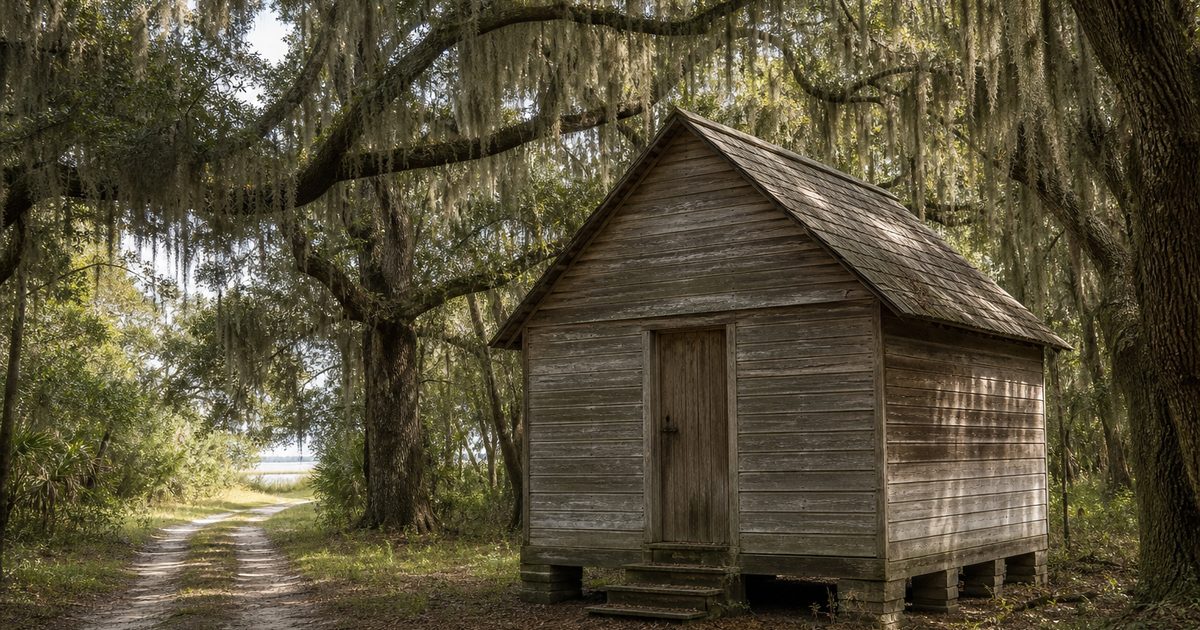
Among the most important were praise houses: small one-room buildings used for prayer meetings, singing, testimony, and community gathering. At one time there were several on the island, often counted as seven. Alongside them stood churches that anchored family and public life. First Union African Baptist Church, established in 1881, remains one of the clearest surviving links to that world.
Burial grounds tell a related story. In Gullah tradition, moving water could hold spiritual meaning, and some burial places were set near it. Grave offerings, household objects, and personal items sometimes marked continuing ties between the living and the dead. On Daufuskie, older cemeteries still show these customs. At places such as Mary Fields Cemetery, some graves are marked by headstones, while older ones may appear only as shallow earth depressions.
The oyster years kept the community on the island
After the plantation era waned, oysters became the economic center of Daufuskie. From the late 19th century into the mid-20th, harvesting and processing shellfish provided work that allowed many Gullah families to remain.
At its height, the oyster trade employed large numbers of people; some accounts put that figure as high as 2,000, though population estimates for the island vary and should be treated with care. What is clear is scale. Oysters from Daufuskie were shipped widely, and the industry gave the island an economic base after cotton.
That mattered culturally as much as financially. A language survives when people can stay in place and use it. So do local forms of worship, cooking, storytelling, and kinship. The oyster economy helped make that possible.
Then it failed. In 1959, pollution in the Savannah River led to the closure of the oyster beds. Once the work disappeared, many residents left in search of wages elsewhere. That out-migration marks one of the sharpest breaks in the history of Gullah Daufuskie. The culture did not vanish, but the community that carried it grew smaller, older, and more scattered.
Wires, memoir, and development
Modern infrastructure arrived late. Electricity came in 1953. Telephone service followed in 1972. On most maps of progress, those dates would barely register. On Daufuskie, they signal the end of a long period in which the island remained apart in practical ways, not just symbolic ones.
National attention followed. Pat Conroy taught on the island in the late 1960s and later wrote about the experience in The Water Is Wide. His book introduced many readers to Daufuskie. It also began a familiar coastal pattern: visibility brought interest, and interest brought change.
Historic recognition came too. Daufuskie Island was listed as a historic district on the National Register, and the island’s historic significance became part of the official record. That acknowledgment mattered. It affirmed that the island’s Black history, including its Gullah heritage, was not marginal or local trivia. It belonged to the national story.
Recognition did not stop development. Private residential projects expanded in the late 20th century, including Haig Point and Melrose. Some parts of the island became gated or restricted. Property values rose. The cost of staying rose with them. The pressure was not only physical but social: an older resident community faced replacement by newer, wealthier arrivals with different ties to the place.
Population figures capture only part of that shift. The census counted 557 residents, but the more revealing number concerns continuity. Reports on the original Gullah population have long pointed to a steep decline. Exact counts differ, and recent claims should be handled carefully, yet the trend is plain. Only a small number of native Gullah families remain on the island.
What remains, and how to read it
Persistence can look fragile from the outside. On Daufuskie, it is still tangible.
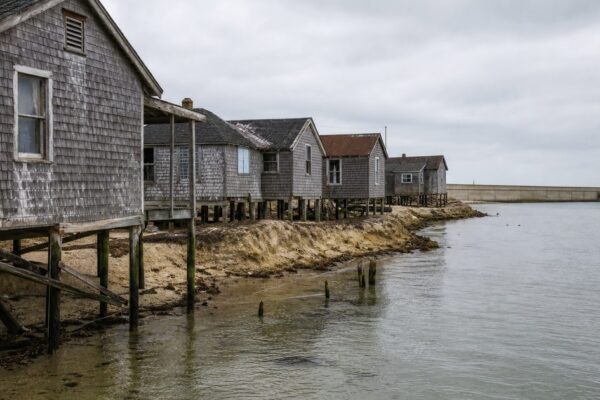
The Billie Burn Museum, housed in the former Mt. Carmel Baptist Church No. 2, preserves objects tied to island life and Gullah history. The Robert Kennedy Historic Trail links sites associated with that history across the island. Houses such as the Moses Ficklin Cottage and the Frances Jones home keep domestic space in view, not just public memory. Tabby ruins and former quarters remain as harder evidence of plantation and post-plantation life.
First Union African Baptist Church still holds services. Cemeteries remain active ground, not relics. Family return gatherings, including Daufuskie Day, bring descendants back to the island. Teachers, guides, church members, and local historians continue to explain what this place means and what has been lost.
That last point matters. Daufuskie is not a museum set aside from ordinary life. It is inhabited. It is reached by ferry or private boat. Much of it still moves at the pace of dirt roads and golf carts, but that surface quiet can mislead. Visitors who come in search of Gullah history are entering a living community with private property, protected sites, and a long memory of outside extraction.
So what preserved Gullah culture here? Not isolation alone. Geography helped. Water slowed intrusion. Planter absence created room, though within the brutality of slavery. Emancipation allowed return and rootedness. The oyster economy gave families reason to stay. Churches, praise houses, cemeteries, and language carried memory forward. Later, development thinned the community but did not erase its trace.
On Daufuskie Island, Gullah culture survives in a form that is still legible on its own ground. That is rarer than it sounds.
FAQ
How do you get to Daufuskie Island?
Daufuskie Island is accessible only by water, usually by ferry or private boat.
What is Gullah culture?
Gullah culture belongs to descendants of enslaved Africans in the Sea Islands and coastal Lowcountry. It includes a distinct creole language, foodways, spiritual practices, storytelling, and community traditions.
Is Daufuskie Island still inhabited?
Yes. Daufuskie has a year-round population, though the historic Gullah community is much smaller than it once was.
What is the Robert Kennedy Historic Trail?
It is a self-guided trail on Daufuskie that connects historic sites associated with island life and Gullah heritage.
Can you drive on Daufuskie Island?
The island has limited road infrastructure, and golf carts are commonly used for local travel. Access to the island itself is by boat.