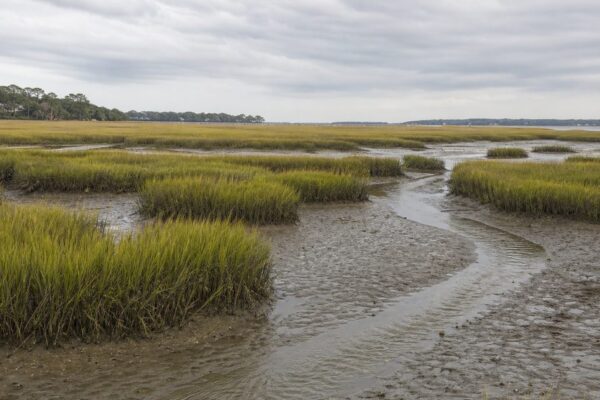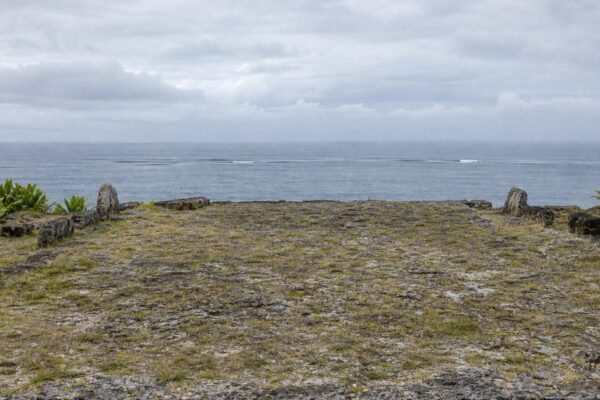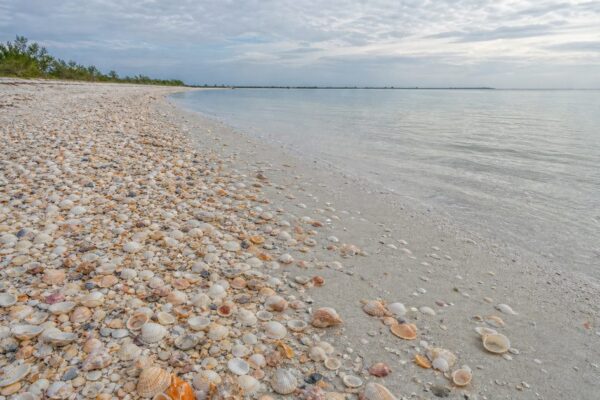
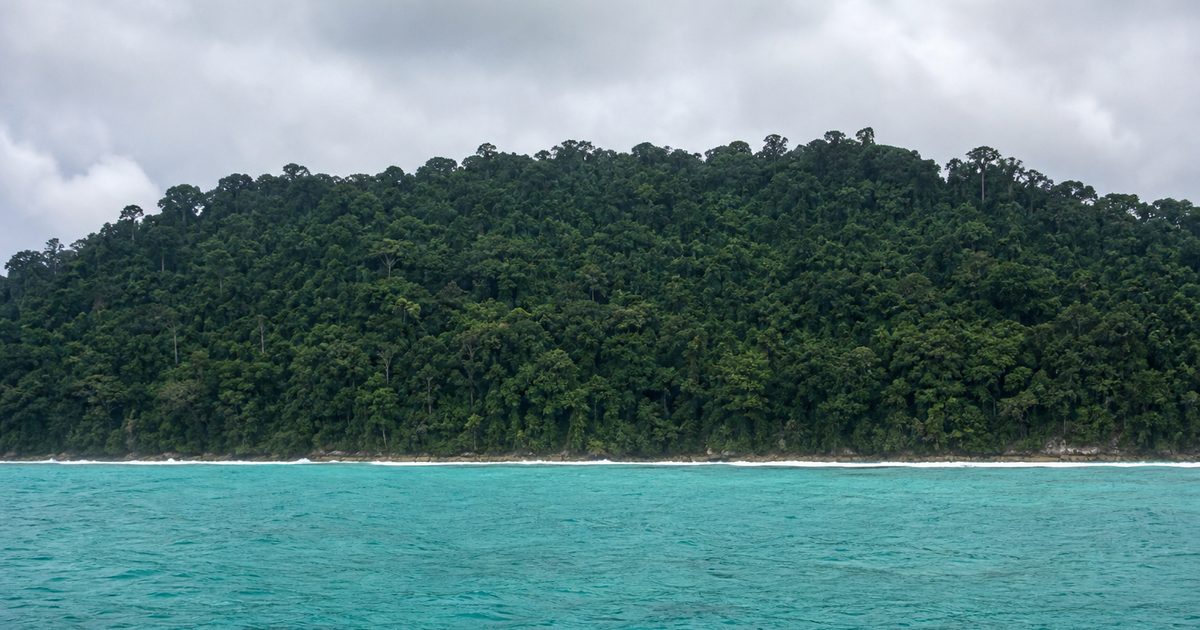
A ring of coral does much of the first work. Boats struggle to cross it, surf breaks over it, and beyond it the forest rises in a dense wall. North Sentinel Island lies only a short distance west of South Andaman in the Bay of Bengal, yet for outsiders the decisive fact is not where it sits on a map. It is that the people who live there have spent generations making clear that the island is not open to them.
That is why North Sentinel Island is off-limits.
The closure is often framed as mystery, as if the island were sealed by romance or fear. The real reasons are plainer and harder. North Sentinel is protected because the Sentinelese have repeatedly rejected contact, because outside contact has already caused harm, and because a small isolated community faces grave risk from diseases that visitors might carry without noticing. The ban is also a rare legal acknowledgment that isolation can be a form of self-determination.
The barrier is physical, but not only physical
North Sentinel Island covers about 59.67 square kilometers. It is roughly square, edged by pale beaches and enclosed by coral reefs, with tropical rainforest over most of its interior. The highest ground reaches about 122 meters. Seen from the sea, though, topography matters less than access. The reefs make landing difficult, and the narrow beaches leave little room to arrive unnoticed.
Geography alone does not explain the island’s status, but it helps explain how the Sentinelese have maintained distance for so long. They are widely understood to descend from some of the earliest human migrations out of Africa, and estimates often place their presence in the Andamans tens of thousands of years in the past. Figures such as 50,000 to 60,000 years appear often in writing about them, though precise timelines belong more to broad human prehistory than to anything documented on the island itself.
What matters in the present is the consequence of long isolation. A community that has remained apart for so long may have little or no immunity to common outside illnesses. Flu, measles, even a cold could be devastating. Population estimates vary sharply, which is itself a sign of how little direct knowledge exists. Numbers published over time have ranged from a few dozen to well over a hundred. India’s 2011 census listed 15, but that figure is generally treated as speculative rather than measured. Whether the true number is closer to 50 or 150, the point does not change: this is a very small population, and disease risk is existential.
So when people ask, why is North Sentinel Island off-limits, the first answer is medical before it is political. Contact could kill.
What early encounters made brutally clear
The historical record is thin, but what survives is enough.
In 1867, the merchant ship Nineveh ran aground on the reef near the island. Survivors reached shore and were attacked before rescue arrived. That episode is often presented as proof of hostility. It makes more sense as proof of consistency. Outsiders arrived uninvited; islanders resisted.
The most revealing encounter came in the 1880s, when the British colonial officer Maurice Vidal Portman abducted six Sentinelese, described in the record as an elderly couple and four children, and took them to Port Blair. The adults died after falling ill. The children were returned to the island.
There is no need to embellish that story. It already contains the whole argument in miniature: coercion, disease, and the colonial assumption that isolated people could be handled as specimens. If North Sentinel Island now sits behind legal restrictions, that history is part of the reason. The present policy did not emerge from abstraction. It emerged from damage.
This matters for another reason. The Sentinelese are often described as if their refusal were instinctive or irrational. The record suggests something else. Across different encounters and across generations, they have defended territory and rejected intrusion. That is not a mystery. It is a political position.
India’s shift from contact to restraint
For a time, the Indian state did not fully accept that position.
From the 1960s into the 1990s, officials and researchers made a series of contact expeditions, often leaving gifts on the shore. These efforts were associated with the Anthropological Survey of India and the Andaman administration. In 1991, one expedition was widely described as a moment of relatively friendly contact, with Sentinelese approaching without the immediate aggression seen in other encounters.
That moment is easy to overread. It did not mean the island had opened, nor did it prove that regular contact could be made safe. At best, it showed how fragile such encounters were. A brief lowering of tension did not remove the danger of disease, dependency, or escalating intrusion.
By the late 1990s and early 2000s, policy shifted toward what is often called a hands-off approach. That change was more than administrative. It marked a different understanding of protection. Earlier efforts assumed that contact was desirable if handled carefully. The later approach accepted that the most respectful choice might be no contact at all.
That is the ethical center of the island’s status. To leave the Sentinelese alone is not neglect. It is policy shaped by the recognition that contact has a record, and that the record is bad.
The law around North Sentinel Island
The legal basis for the island’s protected status goes back to the Andaman and Nicobar Islands (Protection of Aboriginal Tribes) Regulation, 1956. Under that framework, North Sentinel Island is a tribal reserve, and entry is prohibited. A buffer zone also restricts approach. One commonly cited limit is 5 kilometers from shore; some accounts cite 5 nautical miles. The wording and enforcement details have shifted over time, but the principle has not: outsiders are not permitted to go there.
The island lies within India’s Andaman and Nicobar Islands Union Territory, yet the law treats the Sentinelese differently from ordinary residents of Indian territory. India does not recognize them as a separate state, but it does recognize a right to remain apart. That distinction matters. North Sentinel is not independent in the diplomatic sense. Still, the exclusion zone amounts to a practical acknowledgment that the people on the island control access to their own world.
This also explains one of the most misunderstood features of the policy. When intruders are killed on the island, the Indian state does not treat the event as if it occurred in an ordinary public space. The people violating the law are the outsiders who entered a protected reserve. The Sentinelese are understood to be defending their territory.
That is not a romantic exception carved out for an exotic place. It is a hard legal and moral judgment built on precedent.
Survival does not mean being frozen in time
Accounts of the Sentinelese often lapse into a crude contrast: modern world on one side, prehistoric tribe on the other. The details that are known do not support that picture.
The Sentinelese live by hunting, gathering, and fishing. They use the island’s forest and coastal waters for food, including fish, crabs, mollusks, sea turtles, wild fruits, tubers, honey, nuts, wild pigs, and birds. They use bows, arrows, spears, and knives. They also salvage metal from wrecks caught on the reef and shape it into tools and arrowheads.
That last detail matters. It shows selection rather than isolation in the absolute sense. The wider world reaches the island in fragments: a broken hull, a piece of iron, a drifting object. The Sentinelese use what suits them and reject the rest. They are not untouched by history. They are unwilling to be absorbed by it on someone else’s terms.
Reports also describe narrow outrigger canoes used in shallow water, communal dwellings, and temporary beach shelters. Because direct observation is limited and ethically constrained, such details should be treated with care. They come from brief sightings, older encounters, and distant surveys, not from sustained fieldwork. Even so, the broader point holds. The islanders are not relics. They are a living society making choices within the conditions available to them.
After the tsunami, the message did not change
The 2004 Indian Ocean earthquake and tsunami altered coastlines across the region, including North Sentinel Island. Reports indicated that parts of the island were uplifted by as much as 2.1 meters, changing reefs and shorelines.
In the aftermath, Indian authorities carried out aerial checks to see whether the Sentinelese had survived. They had. In one widely circulated image from those surveys, a man on the shore aimed arrows at a helicopter.
That scene is often used for drama. It is more interesting as continuity. Even after a disaster large enough to reshape the island itself, the basic relationship held. Outsiders approached; the answer was refusal.
The cost of ignoring the ban
The exclusion zone around North Sentinel is not symbolic. People who breach it put themselves at risk and may endanger the islanders as well.
In 2006, two Indian fishermen, Sunder Raj and Pandit Tiwari, drifted onto the island after their boat came loose at anchor. They were killed. Helicopters later tried to recover the bodies, but islanders drove them off with arrows.
In November 2018, the American missionary John Allen Chau illegally arranged passage to the island in an attempt to evangelize the Sentinelese. He was killed shortly after landing. Reports from fishermen who took him near the shore said his body was dragged and later seen buried on the beach, but authorities did not recover it.
That episode drew global attention, and much of the coverage missed the point. The story was not that a forbidden island had claimed another victim. The story was that a protected boundary had been violated for reasons that repeated an old pattern: the outsider’s belief that his mission outweighed the wishes and safety of the people already there.
Anyone searching can you visit North Sentinel Island or what happens if you go to North Sentinel Island is really arriving at the same answer. No, you cannot lawfully visit, and the prohibition exists to prevent irreversible harm, not to heighten the island’s aura.
Why the island remains closed
Many restricted places are closed because they contain military installations, fragile ruins, or vulnerable wildlife. North Sentinel Island is different. It is closed because another society has made its refusal unmistakable, and because history shows what follows when outsiders ignore that refusal.
The moral case and the practical case are the same. Contact threatens the Sentinelese with disease. It invites exploitation. It risks violence on the beach and grief afterward on both sides. And it erodes one of the few remaining examples of a people still able, however precariously, to hold the line against incorporation.
So why is North Sentinel Island off-limits? Because the people there have said no, because the outside world has not earned their trust, and because the safest, least damaging response is to respect the boundary.
FAQ
Why is North Sentinel Island off-limits?
India bars access to protect the Sentinelese from disease, prevent exploitation and violence, and respect their long-standing refusal of contact.
Can you visit North Sentinel Island?
No. Entry is illegal under Indian law, and boats are not allowed to approach the protected zone around the island.
What happens if you go to North Sentinel Island?
You would be breaking Indian law and could face lethal resistance from the Sentinelese, who have repeatedly defended their shore against intruders.
How do the Sentinelese survive?
They live by hunting, gathering, and fishing, using the island’s forest and coastal waters for food and materials.
What happened to John Allen Chau?
He illegally landed on North Sentinel Island in November 2018 in an attempt to contact the Sentinelese and was killed soon after coming ashore.