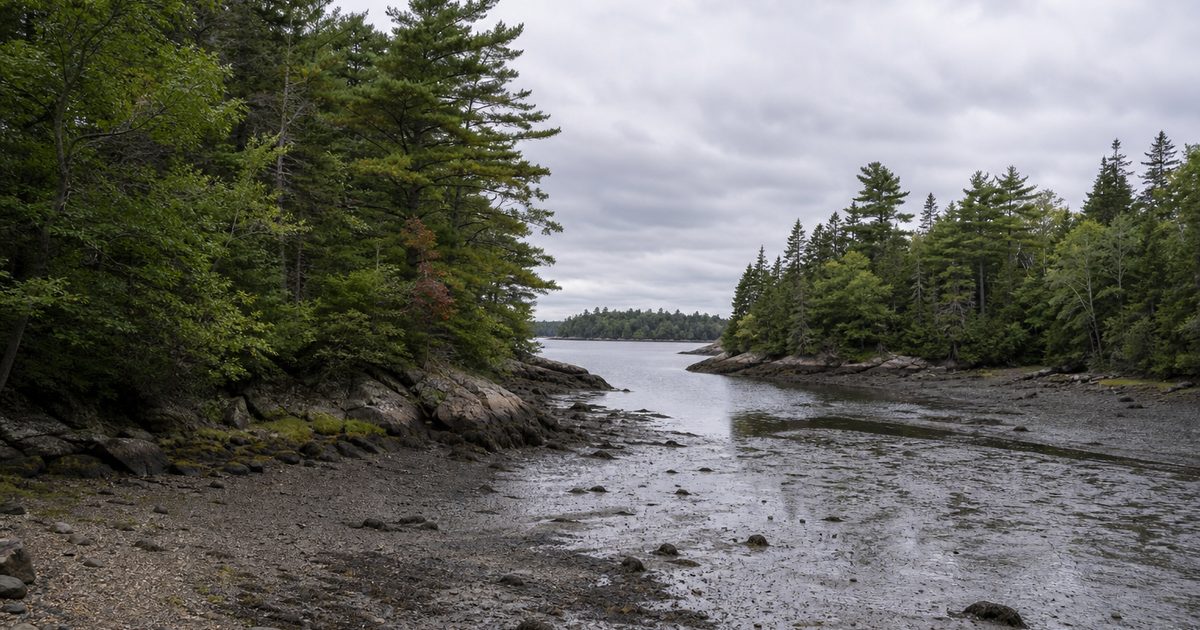
A shoreline of more than 640 kilometers belongs, at first glance, to a much larger place. Yet Rhode Island, the smallest state in the US, fits inside a compact corner of New England. The mismatch is real, and it helps explain the state’s early history. This was not a colony shaped by a broad interior. It grew around water: around Narragansett Bay, around island settlements, around harbors that linked communities more easily than roads did. The old name, Rhode Island and Providence Plantations, preserved that geography in plain sight.
The making of Rhode Island was never a tidy founding story. It began in Native homelands, passed through epidemic disease, sharpened in religious dispute, and hardened in war. Its political identity emerged from a set of separate settlements that learned, not always gracefully, to share a charter. To understand why the state carries an island name despite being mostly mainland, and why its history feels larger than its size, it helps to stay close to that original structure: bay, island, and refuge.
Before Rhode Island, a Native world around the bay
Long before English colonists arrived, the region around Narragansett Bay was home to Indigenous peoples including the Narragansett, Wampanoag, Niantic, Nipmuc, and Pequot. This was not an empty coast awaiting settlement. It was a settled and contested landscape, with alliances, trade, diplomacy, and defined territories.
Estimates suggest the Narragansett population may have reached about 16,000 before 1600. When Giovanni da Verrazzano made the first documented European contact with the area in 1524, he encountered a densely inhabited shore. The bay that later anchored colonial Rhode Island was already central to Native life.
Then disease altered the balance of the region before English settlement took hold. Epidemics in 1616 and 1617 devastated several neighboring Indigenous communities, though the Narragansett appear to have been less affected at first. In 1633, another outbreak struck them directly and killed hundreds. By the time religious dissenters from Massachusetts began looking south, they entered a world already destabilized by epidemic loss.
That matters because early colonial Rhode Island is often told as a story of liberty alone. It was also a story made possible, in part, by catastrophe that had already weakened Native societies.
A colony born in banishment
The familiar name in this history is Roger Williams, and for good reason. Banished from Massachusetts Bay Colony, he founded Providence in 1636 after arguing that civil government should not police religious belief. He also insisted that colonists could not simply claim Native land by royal grant. Providence was established on land acquired from Narragansett sachems Canonicus and Miantonomi.
That purchase did not erase the larger pressures of colonization, but it does distinguish the founding from the fiction of vacant land. Williams understood that he was entering an inhabited political world. His dealings with Native leaders were practical, but they were also shaped by a serious interest in language and diplomacy.
Providence was not alone for long. In 1637, another group of dissenters settled on Aquidneck Island. Among them were Anne Hutchinson, William Coddington, and John Clarke. They, too, acquired land through agreement with Narragansett leaders. Samuel Gorton later established Warwick in 1642.
These communities did not begin as parts of a single colonial plan. They were separate settlements, often suspicious of one another, joined more by the water between them than by any common administration. Early Rhode Island was less a unified colony than a cluster of experiments around a bay.
Why Rhode Island is called Rhode Island
The name itself records that patchwork.
Originally, “Rhode Island” did not refer to the whole state. It referred to Aquidneck Island, where Portsmouth and Newport developed. The mainland settlements, including Providence, were known as Providence Plantations. The later state inherited both names because it was built from both.
The origin of “Rhode Island” remains debated. One theory traces it to Verrazzano, who may have compared Block Island to the Greek island of Rhodes in 1524; later settlers may then have shifted the name to Aquidneck. Another explanation points to the Dutch navigator Adriaen Block, who described an island in the area as “Roodt Eylandt,” or Red Island, perhaps for red clay or autumn foliage. What the evidence does not settle, historians still debate.
What is clear is simpler and more important: the island name came first, the larger state came later. If readers search why is Rhode Island called an island, the answer lies in that older geography. The modern state is mostly mainland, but its political identity grew from an island settlement tied to mainland towns across Narragansett Bay.
Narragansett Bay as political design
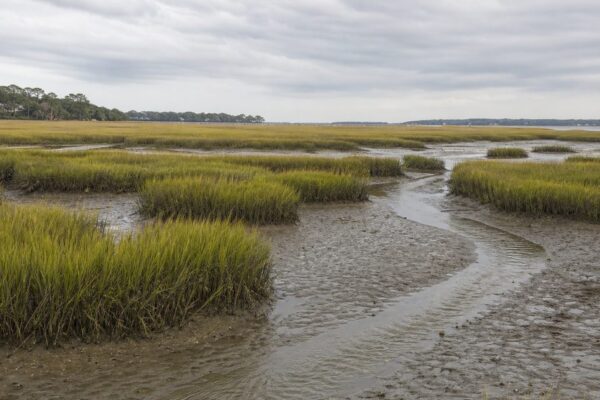
Maps make the point quickly. Narragansett Bay cuts deep into the state and breaks the land into peninsulas, coves, islands, and sheltered harbors. Aquidneck, Conanicut, Prudence, and Block Island sat within a maritime network, while Providence and Warwick faced the same waters from the mainland. In the seventeenth century, these places were easier to connect by boat than by land.
That geography shaped politics. Rhode Island did not develop around one dominant inland center. It formed as a coastal patchwork, with communities that guarded their autonomy and negotiated constantly over how much authority to share. The bay was not scenery. It was the framework that made this colony possible.
It also encouraged a certain cast of mind. Harbors brought merchants, preachers, arguments, and news. Water made movement easier and control harder. In a region where neighboring colonies often enforced religious conformity, the settlements around the bay had room to improvise.
Roger Williams, John Clarke, and the charter of liberty
Williams gave the colony its moral vocabulary, but John Clarke helped secure its legal survival. That distinction matters.
In 1639, Williams briefly founded what is often described as the first Baptist church in America in Providence, though he soon separated from it. His larger contribution was the principle he kept pressing: the state had no authority over conscience. In 1643, he published A Key into the Language of America, a study of Algonquian language and culture that remains one of the most revealing early texts in New England. It shows close observation rather than casual colonial description.
Political recognition came in stages. A parliamentary patent in 1644 recognized the towns, and in 1647 a government was organized for Providence, Portsmouth, and Newport under the name Providence Plantations in Narragansett Bay. The decisive step came in 1663, when Clarke secured a Royal Charter from Charles II. That charter united the settlements under “The Governor and Company of the English Colony of Rhode Island and Providence Plantations.”
Its importance lay in what it protected. The charter granted an unusual degree of religious freedom for the time. In the English Atlantic world of the seventeenth century, where established churches and civil authority were often intertwined, Rhode Island occupied a distinct place. The colony did not invent toleration in the abstract, but it gave it durable legal form.
Liberty and violence in the same place
That reputation for religious freedom can tempt writers into a cleaner story than the record allows. Rhode Island was a refuge for dissenters. It was also part of a colonial frontier built through Native dispossession, epidemic collapse, and war.
King Philip’s War, which began in 1675, was one of the most destructive conflicts in early New England. The Narragansett were drawn into it, and the Great Swamp Massacre of December 1675 became a turning point. Colonial forces attacked a fortified Narragansett village in what is now South Kingstown, killing many inhabitants and devastating the community.
No account of Rhode Island history is honest if it treats liberty as the whole story. The same colony that defended freedom of conscience also emerged in a landscape where Indigenous people faced disease, land loss, and military violence. Those facts do not cancel each other. They belong together.
First to declare independence, last to ratify
The colony’s independent streak did not end with religion. On May 4, 1776, Rhode Island renounced allegiance to George III, making it the first of the thirteen colonies to declare independence from Great Britain. That date still stands as one of the clearest expressions of its political temperament.
Yet the same place proved wary of the new federal order. Rhode Island became the last of the original thirteen states to ratify the US Constitution, doing so in 1790. The pattern is consistent: resistance first, agreement later, and only on terms it could accept.
By then the official name was the State of Rhode Island and Providence Plantations, a reminder that the state still understood itself as a union of older parts. The long title was cumbersome, but it was historically exact. It preserved the island settlement and the mainland plantations in the same phrase.
What the old name carried, and why it changed
For more than two centuries, that composite name remained in use. In 2020, voters approved a constitutional amendment removing “and Providence Plantations,” leaving the official name as the State of Rhode Island.
The change did not alter the seventeenth-century structure behind the state’s formation. It did, however, reflect a modern judgment about language. In colonial usage, “plantations” meant settlements. Over time, the word became inseparable for many people from the history of slavery and forced labor in the Atlantic world. Dropping it from the official name did not erase the past. It changed how the state chose to present itself in the present.
The older history still sits underneath the shorter name. Rhode Island remains a place formed from island and mainland settlements, Native homelands, charters, disputes, and a bay that made separate communities think of themselves, eventually, as one.
The scale is small; the history is not
Rhode Island covers about 4,001 square kilometers in total, with only 2,678 square kilometers of land. Those figures invite understatement. But size has always been misleading here.
The state’s influence rests partly on ideas. Roger Williams and John Clarke helped establish principles of religious liberty and limits on state power over belief that would later echo far beyond New England. It rests partly on geography. Narragansett Bay gave a tiny colony a maritime reach and a political shape unlike that of its neighbors.
And it rests partly on the stubbornness of its founding pattern. Rhode Island was not built as a neat extension of imperial design. It was assembled from dissenting settlements around a bay, then held together by charter and habit. That is why the place can seem oddly outsized in American history. The map looks compact. The arguments that began there were not.
FAQ
Why is Rhode Island called an island?
Originally, “Rhode Island” referred to Aquidneck Island, not the whole state. The mainland settlements were known as Providence Plantations.
Who founded Rhode Island?
Roger Williams founded Providence in 1636 after his banishment from Massachusetts Bay. Other key founders included Anne Hutchinson, William Coddington, and John Clarke on Aquidneck Island.
Why is Rhode Island important in American history?
It played an early role in establishing religious freedom and limits on government control of belief. It was also the first colony to declare independence from Britain on May 4, 1776.
What is the smallest state in the US?
Rhode Island is the smallest U.S. state by area.
When did Rhode Island drop “Providence Plantations” from its name?
Voters approved the change in 2020, and the official name became the State of Rhode Island.