On summer nights, the beach on Fripp Island is meant to stay dark. That is not a mood or an amenity. It is a survival rule.
A hatchling loggerhead sea turtle leaves its nest with almost no margin for error. It breaks through the sand, usually at night, and moves toward the brightest horizon. On an undeveloped shore, that glow comes from the open sky reflected over the Atlantic. On a lit shore, it can come from a porch, a road, or a row of windows. A few misplaced lights can turn the first minutes of a turtle’s life into a fatal detour.
That single fact explains more about Fripp than the usual shorthand about beaches or gates. This barrier island in Beaufort County, part of South Carolina’s Sea Islands, is also a wildlife sanctuary. Its permanent population is small, but summer use rises sharply, and the island itself is narrow, low, and exposed. On ground this slight, habitat is never far from the built edge. The beach is not just scenery. It is working habitat, and after dark it becomes one of the most closely managed stretches of sand on the South Carolina coast.
A beach that functions as nursery
Fripp Island’s turtle season runs through the warm months, when female loggerheads come ashore to nest above the tide line. The species is Caretta caretta, the loggerhead sea turtle, and the island serves as one of many nesting beaches along the southeastern United States. Here, the numbers are modest enough to feel local and significant enough to matter: about 40 nests are laid on average each year, with an average clutch size of 116 eggs.
Those figures change the way the shoreline has to be understood. A marked patch of sand is not a minor conservation gesture. It may hold more than a hundred eggs, incubating in a strip of beach that is also vulnerable to tides, erosion, foot traffic, predators, and artificial light. When hatch success averages around 80 percent, the island can produce roughly 3,000 hatchlings between July and September in a typical season. For a place this small, that is a serious ecological role.
The logic behind turtle protection on Fripp is practical. Nesting females need a beach they can reach and use. Eggs need enough stable sand above the wash of ordinary tides. Hatchlings need darkness, or at least the right kind of brightness: the natural glow over the ocean rather than the inland glare of development. That is why beachfront lighting rules on barrier islands are so strict. The point is not aesthetic restraint. The point is orientation.
Searches for Fripp Island sea turtles often treat the subject as a wildlife sighting. In reality, the island’s relationship with loggerheads is less about spectacle than management. Most of the work happens when little is visible: patrols at dawn, nest marking, monitoring, and the constant effort to keep the beach usable for a species that evolved for coasts, not for coastal real estate.
Why darkness matters more than people think
A loggerhead hatchling does not “know” where the ocean is in any human sense. It follows cues. On a natural beach, the seaward horizon is usually brighter and more open than the landward side, which tends to be darker and visually cluttered by dunes and vegetation. Artificial lighting scrambles that ancient system.
On Fripp, this makes darkness a form of habitat. A dark beach is as necessary as dry sand. Remove either one and the nesting ground still looks intact to people while becoming less viable for turtles.
That is one reason barrier-island conservation can be hard to grasp from a distance. Damage does not always arrive as obvious destruction. Sometimes it comes as a small shift in conditions: a brighter shoreline, a harder edge, a beach narrowed by erosion, a management decision that protects property but changes the shape of the upper shore. The sand remains. The ecological function weakens.
Beaufort County’s rule that no light should be visible from barrier-island beaches reflects this reality. On Fripp, where homes and roads sit close to habitat, the rule asks residents and property managers to accept a simple premise: the beach after dark does not belong entirely to human convenience.
The volunteers who read the sand
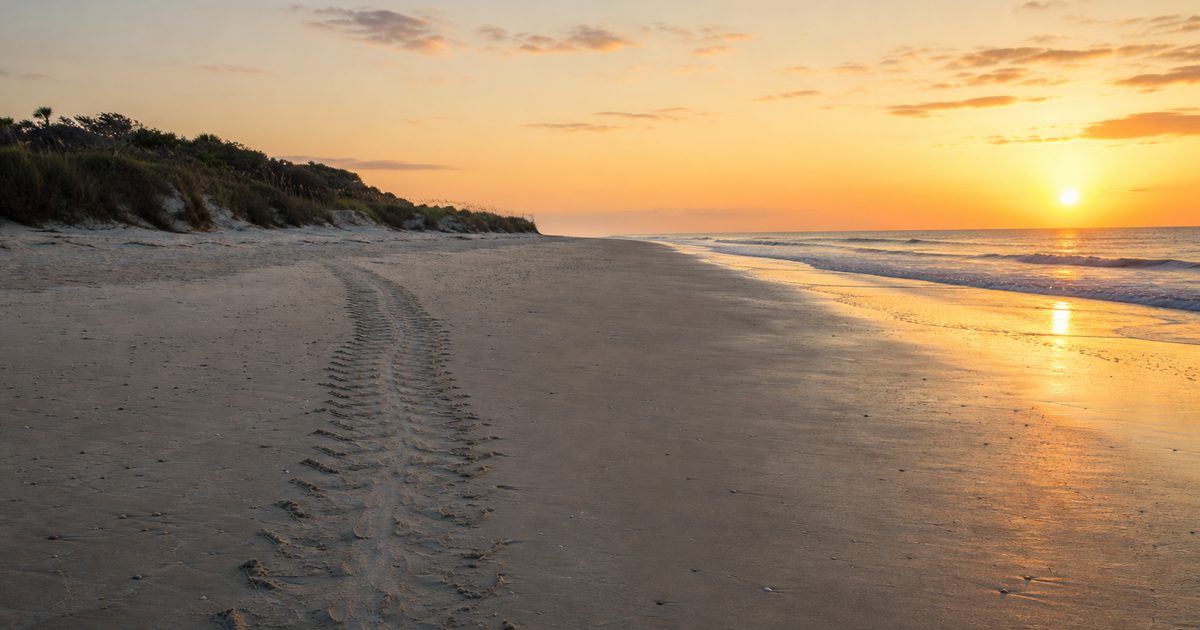
By sunrise, the night’s evidence is still there for anyone trained to see it. A crawl in the sand can show where a female came ashore, where she turned, where she dug, and whether she nested successfully. That reading of tracks is part of the work of the Fripp Island Loggerhead Patrol, a volunteer group that operates under the South Carolina Department of Natural Resources.
Their presence gives the island’s conservation effort its daily shape. Nests are identified, marked, and monitored through the season. What looks to a casual walker like a few stakes and tape is the visible edge of a larger system of stewardship. Without that work, many nests would be easier to miss and harder to protect.
The patrol also makes plain that turtle conservation on Fripp is not a symbolic label attached to a private island. It is labor. It depends on early mornings, careful record-keeping, and rules that can feel inconvenient precisely because they are meant to protect a process more fragile than it appears.
Anyone looking up loggerhead turtles Fripp Island is really looking at this combination of biology and management. The species comes ashore by instinct. Its continued success on a developed barrier island depends on people choosing not to interfere more than they already have.
A moving shoreline, not a fixed one
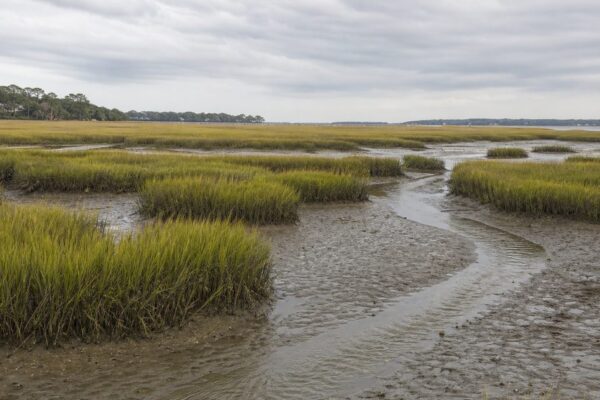
The difficulty is that loggerheads do not nest on a static platform. Fripp is a barrier island, and barrier islands are built on movement. Wind shifts sand. Tides cut and refill edges. Storms can strip a beach in a single event and rebuild parts of it elsewhere. Erosion is not an exception here. It is part of the coastal pattern.
That makes turtle nesting vulnerable in very specific ways. A beach can become too narrow. Nests laid too low can flood. Steeper scarps can make access harder for nesting females. Human responses to erosion can create another layer of tension. Measures meant to defend property do not always align neatly with the needs of a species that requires a broad, navigable, sandy shore.
This is where Fripp’s ecology becomes more revealing than any postcard view. The island’s value as habitat depends on instability, yet people tend to manage coasts as if stability were the natural goal. For sea turtles, that mismatch matters. A nourished beach may provide nesting space in one period. Harder shoreline interventions can reduce or complicate it in another. The balance is never simple, and the article’s own facts do not support easy claims beyond that.
Because the island sits so low, flooding and storms are not abstract future concerns but recurring coastal conditions. Any discussion of Fripp Island wildlife that leaves out erosion and flood risk misses the point. The turtles are not using a protected reserve set apart from change. They are nesting on a thin margin of sand that is always being remade.
A private island with public ecological weight
Fripp is a private, gated community managed by the Fripp Island Property Owners Association. Access is restricted, and that shapes how people encounter the island. But restricted access does not make the ecological significance private. A nesting beach matters beyond the property line.
That tension runs through much of the island’s environmental story. Fripp holds wildlife designations, including National Wildlife Federation certification as a Community Wildlife Habitat, and local conservation groups such as the Naturally Fripp Community Wildlife Habitat Team work alongside the Loggerhead Patrol. Those labels are meaningful only if they translate into decisions on the ground: darker shorelines, protected nests, leash rules, no feeding of wildlife, and some acceptance that the beach cannot be managed solely as residential frontage.
The turtle story is therefore also a story about governance. Who controls light? Who decides how to respond to erosion? How much disturbance is tolerated in nesting season? On a barrier island with homes, roads, and seasonal population surges, those questions are not secondary. They determine whether the beach remains reproductive habitat or becomes a beach in name only.
What legend misses and biology insists on
Fripp has its folklore. Local tradition holds that Blackbeard may once have used the island as a hideout and perhaps buried treasure there. It is a good coastal legend, and it should stay in that category: legend, not established fact.
The more demanding story is the one written each summer by turtles. It has none of the romance of pirate lore and far more consequence. A female hauls herself ashore, digs with her rear flippers, lays her eggs, covers the nest, and returns to sea. Weeks later, if conditions hold, hatchlings rise through the sand and orient toward the brightest natural horizon they can find. Every stage depends on a chain of conditions that people can break with surprising ease.
That is why the beach on Fripp cannot be understood simply as property, recreation space, or scenic edge. For part of the year, and in a biological sense all year, it is a nursery. Once that is clear, the island’s rules stop looking ornamental. They look like what they are: attempts, partial and imperfect, to let an ancient coastal ritual continue on a modern inhabited shore.
What remains at stake on Fripp Island
The future of turtle nesting on Fripp will turn on ordinary decisions repeated over time. Keep the shore dark. Protect nests. Limit disturbance. Respond to erosion without pretending the island can be fixed in place forever. Respect the fact that a barrier island is dynamic even when development prefers certainty.
That makes Fripp Island South Carolina an instructive place. Its turtle story is not one of untouched nature. It is about coexistence under pressure, on a low Atlantic island where habitat and settlement press close against each other and where the most important light on summer nights still ought to come from the sky.
FAQ
Are there sea turtles on Fripp Island?
Yes. Loggerhead sea turtles nest on Fripp’s beaches during the warm season, and the island averages about 40 nests each year.
Why are lights restricted on Fripp Island beaches?
Hatchling loggerheads orient toward brightness. Artificial beachfront lighting can draw them away from the ocean and reduce their chances of survival.
Who protects turtle nests on Fripp Island?
The Fripp Island Loggerhead Patrol, a volunteer group working under the South Carolina Department of Natural Resources, monitors and protects nests.
When do loggerhead turtles nest on Fripp Island?
Nesting takes place between May and August, with hatchlings typically emerging between July and September.
Is Fripp Island public for turtle watching?
Fripp is a private, gated island with restricted access. Any wildlife viewing should respect access rules, marked nests, and beach protections.