
A clay tablet from Uruk records quantities rather than a king’s victories. Its marks belong to a system that emerged around 3400-3300 BCE, when officials in southern Mesopotamia began setting down information their institutions could no longer entrust to memory alone.
These early documents offer an unusually practical beginning to the story of civilization. Before writing preserved poetry or royal histories, it helped people account for goods and labor. Behind the marks lay fields, stores, workers and authorities with an interest in keeping track.
Uruk stood in what is now southern Iraq, within the region later known as Sumer. Its remains help explain why southern Mesopotamia holds such a prominent place in discussions of the first civilization in the world. The strongest evidence concerns a convergence: cities grew, institutions accumulated resources, monumental buildings rose and writing entered administrative life.
No single tablet marks the moment civilization began. But the records bring a profound change into view: people were learning to organize society on a scale that personal acquaintance could no longer sustain.
Before the city, the managed field
Southern Mesopotamia occupies an alluvial plain shaped by the Tigris, Euphrates and their shifting waterways. River water made cultivation possible in a region where rainfall alone could not reliably support intensive farming.
That possibility required work. Communities directed water toward fields and maintained channels as sediment accumulated and river courses changed. Irrigation helped support larger populations, but it also created recurring demands for cooperation.
The relationship between water management and political authority remains debated. It would be too simple to imagine that digging canals automatically produced rulers. Families and communities could organize agricultural work without a centralized state. The question is how such arrangements expanded, and how particular institutions gained control over land, labor and surplus.
The Ubaid period, broadly dated to about 6500-4000 BCE, provides much of the background. Its chronology varies across Mesopotamia; these dates do not describe a single, simultaneous transformation throughout the region.
Nor did farming begin on this southern plain. Agricultural communities had developed elsewhere in Southwest Asia thousands of years before Uruk’s expansion. Sumer’s significance lies in the later emergence of an urban society, rather than in the invention of agriculture itself.
Eridu and the authority of a place
At Eridu, successive builders returned to the same sacred location.
Founded around 5400 BCE, the settlement preserves a long sequence of buildings interpreted as temples. Excavators found later structures standing above earlier ones, recording repeated acts of construction across many generations.
The earliest buildings were modest. Their successors became more substantial, suggesting that the resources devoted to this location increased over time. The sequence gives physical form to something otherwise difficult to recover: the persistence of an institution.
In later Sumerian religion, Eridu belonged to Enki, a god associated with subterranean fresh water, wisdom and ritual knowledge. Identifying every early building with the fully developed worship known from later texts would go beyond the evidence. Still, the site’s long religious history helps explain its exceptional standing in Sumerian tradition.
The Sumerian King List placed Eridu at the beginning of kingship. In its account, kingship descended from heaven and first rested there before a great flood.
This was a statement about sacred origins, not a reliable chronology. The fantastically long reigns assigned to its earliest rulers make that distinction clear. Written long after Eridu’s foundation, the tradition reveals how later societies understood the settlement’s antiquity and authority.
The excavated buildings tell a narrower, firmer story. People repeatedly invested labor in a shared sacred place. Long before the largest cities emerged, certain institutions could already command resources and maintain continuity beyond a single lifetime.
Uruk becomes something larger
During the fourth millennium BCE, Uruk expanded on a scale that distinguishes it from earlier settlements.
Archaeologists commonly place the Uruk period at approximately 4000-3100 BCE, although regional chronologies differ. By its later stages, the city covered several hundred hectares. Population estimates around the beginning of the third millennium often range between 25,000 and 50,000.
These figures are reconstructions, not census results. They depend on assumptions about occupied space and household density. Even cautiously interpreted, however, the evidence points to an extraordinary concentration of people.
A population of that size needed dependable supplies of food and materials. Many inhabitants carried out work other than growing their own crops. Agricultural production, craft activity and the movement of goods had to connect across the city and its surrounding countryside.
Monumental architecture reveals the resources available to powerful institutions. Uruk’s Eanna precinct contained substantial ceremonial buildings, while the White Temple stood on a raised platform in another major sacred district. Its elevated position made religious authority visible across the settlement.
Calling these complexes “temples” does not mean they functioned like places of worship separated from economic life. Religious institutions could also hold goods, organize work and participate in production. Their precise responsibilities changed, and the surviving evidence does not reveal every aspect of their operation.
Mass-produced pottery adds another perspective. The characteristic bevel-rim bowls found at Uruk and related sites suggest repetitive, standardized activity. Scholars often connect them with food distributions or labor rations, though their exact uses remain debated.
The bowls and monumental buildings belong to the same problem of scale. How could institutions mobilize people, distribute supplies and make obligations repeatable? The answer increasingly depended on systems that extended beyond face-to-face exchange.
What the first tablets could do
Around 3400-3300 BCE, proto-cuneiform appears in the archaeological record at Uruk.
Many early tablets combine numerical signs with signs for commodities or administrative categories. They allowed officials to record quantities and distinguish between types of goods. Other early documents include lists used to organize knowledge and train scribes.
These were not simply pictures developing, step by inevitable step, into an alphabet. The system combined signs, conventions and numerical methods suited to particular tasks. Reading it required learned knowledge.
Its relationship to spoken language also needs care. The earliest tablets often contain too little linguistic information to establish their language securely. Later cuneiform clearly recorded Sumerian, but that does not make every earlier document straightforwardly readable as Sumerian speech.
Over subsequent centuries, writing acquired greater flexibility. Signs increasingly represented sounds as well as things or categories. Scribes could record names, grammatical relationships and more complex statements.
The familiar wedge-shaped appearance developed through changes in how scribes impressed signs into clay with a stylus. This was a gradual history, not a single invention completed on a securely known date.
What changed first was institutional memory. A record could survive the transaction it described and remain available after the people involved had left. It made quantities recoverable and obligations harder to forget.
That did not necessarily make administration fairer. Records could help distribute provisions, but they could also support the extraction of labor and resources. Writing expanded what institutions could manage, including their power over people.
Why “first” remains a difficult word
Uruk is often described as the first city, and Sumer as the earliest civilization. These are useful shorthand expressions, provided their limits remain visible.
A large settlement is not automatically a city. Archaeologists also consider specialized work, public institutions, social differentiation and relationships with surrounding settlements. Nor is “civilization” a neutral measure of human worth. Communities without cities or writing possessed complex knowledge, social obligations and cultural traditions.
Southern Mesopotamia’s claim rests on the unusually early combination of urban scale, monumental institutions and written administration. It does not mean that every important development originated there.
Egypt developed a state and writing during the late fourth millennium BCE. The chronology and possible connections between early writing traditions remain subjects of research. Evidence does not justify reducing these histories to a simple contest with an uncontested winner.
Mesopotamia itself was connected to neighboring regions. Materials and ideas circulated through exchange networks, while communities beyond the southern plain contributed their own practices. Scholars continue to examine how much those relationships shaped urban growth.
Even the label “Sumerian” requires restraint when applied to the earliest stages. Later texts establish the importance of the Sumerian language, but archaeological objects alone cannot securely identify the language or identity of everyone who made them.
The development was regional, uneven and cumulative. No founding moment explains it all.
The cities beneath the mounds
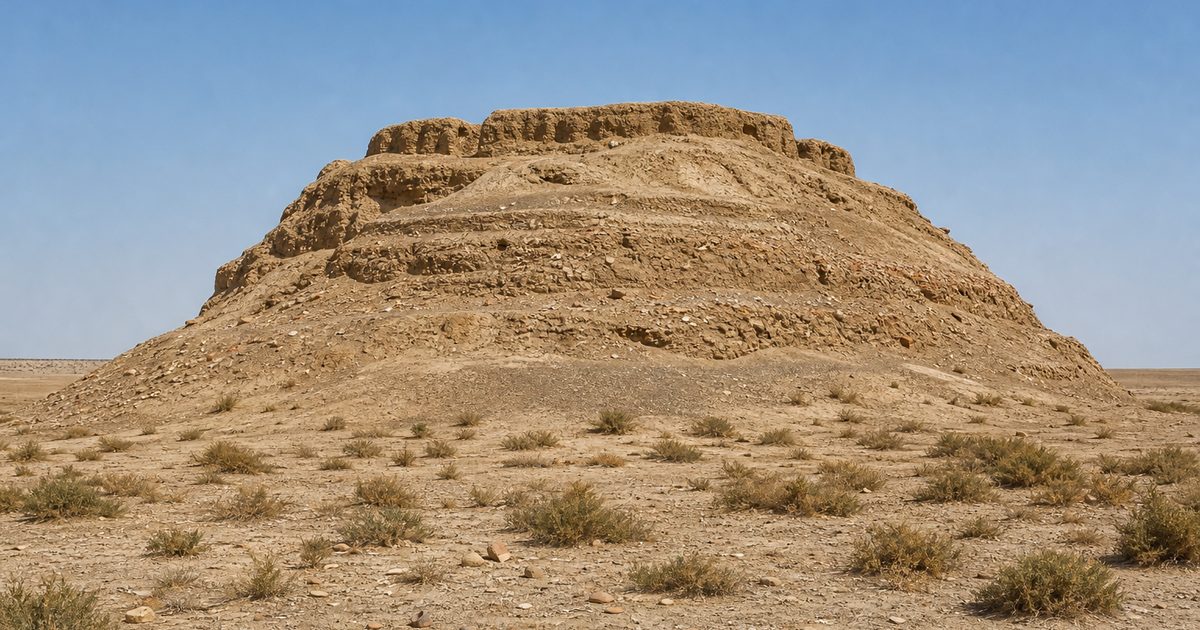
At Uruk and Eridu, much of this history survives as foundations, broken pottery and layers of accumulated occupation. The mounds are the remains of repeated building and rebuilding, not complete cities preserved at one moment.
Ur’s partially reconstructed ziggurat offers a more immediately recognizable monument. King Ur-Nammu began its construction around 2100 BCE, centuries after the first urban transformation. It belongs to a later phase of Sumerian political and religious life, rather than to civilization’s supposed starting point.
That distinction matters. The most visible structure is not necessarily the earliest evidence.
Uruk, Ur and Tell Eridu form the archaeological component of the UNESCO-listed Ahwar of Southern Iraq. The wider property also includes wetlands associated with the living cultural landscape of the Marsh Arab communities. Those communities should not be treated as unchanged survivors of antiquity.
Conflict, looting and environmental pressures have damaged the region’s archaeological heritage. Conservation must contend with those losses while protecting fragile remains whose significance may be difficult to recognize at ground level.
An undecorated tablet or a low mud-brick foundation can carry more evidence for the emergence of urban life than a towering monument.
FAQ
Where was the first civilization in the world?
Southern Mesopotamia, in modern southern Iraq, is widely recognized as an early center of urban civilization. Its claim rests on the combination of cities, monumental institutions and writing, especially at Uruk.
Why is Uruk considered the first city?
Uruk reached an exceptional size during the fourth millennium BCE. Its monumental buildings, specialized production and administrative records show a complex urban society connected to a wider agricultural landscape.
When did writing begin in Mesopotamia?
Proto-cuneiform appeared around 3400-3300 BCE. Early tablets mainly recorded quantities, goods and administrative information. Writing developed greater linguistic flexibility over the following centuries.
What is the difference between Sumer and Mesopotamia?
Mesopotamia names a broad region associated with the Tigris and Euphrates rivers. Sumer refers to its southern part, particularly the area associated with Sumerian-speaking cities during the third millennium BCE.
Can the remains of Sumer still be seen?
Yes. Archaeological remains survive at Uruk, Eridu, Ur and other sites in southern Iraq. Access depends on current security conditions, local requirements and conservation restrictions.