A strip of sand 13 miles long should not have carried this much history. Yet Amelia Island, at Florida’s northeastern edge, changed hands so often that locals long ago turned the fact into a shorthand: the Isle of Eight Flags.
That phrase can sound like civic branding until the sequence is laid out. French. Spanish. British. Patriot. Green Cross. Mexican Rebel. United States. Confederate. Each flag marked a real contest over the same narrow island and, more importantly, over the harbor beside it. Amelia Island was never valuable for its size. It mattered because ships could use it, armies could defend it, smugglers could exploit it, and rival governments could not ignore it.
The usual version of the story treats the flags as curiosities. The deeper story is harsher and more interesting. This was a borderland where treaties signed an ocean away collided with local violence, weak garrisons, private ambition, and the stubborn facts of geography.
Before the first European claim
Long before the first European flag was raised here, the island belonged to the Timucua world. The Timucuan mound-building culture lived in this region from about 1000 CE into the early 1700s. They knew the island as Napoyca. Shell middens and other traces along this coast show a place already inhabited, named, worked, and understood on its own terms.
That matters because the eight-flag story begins, in most written accounts, when Europeans start recording their claims. The record of flags is really a record of colonial power. It tells us who fought over the island in imperial archives. It does not mark the beginning of the island’s history.
As Spanish colonization spread through Florida, that older world was disrupted and then broken apart through disease, missionization, warfare, and displacement. Any honest Amelia Island history has to begin there.
A French landing, then Spanish violence
The first recorded European arrival came in 1562, when the French Huguenot explorer Jean Ribault reached the island. He named it Île de Mai, or Island of May, and raised the French flag. On paper, it was a claim. In practice, it was one move in a larger struggle for the southeast coast.
Spain answered quickly. In 1565, forces led by Pedro Menéndez de Avilés drove out the French presence in Florida. Ribault and many French colonists were killed in that campaign. The Spanish flag replaced the French one, not through ceremony but through conquest.
By 1573, Spanish Franciscans had established the Santa María mission on the island, which the Spanish called Isla de Santa María. Mission and military power worked together here, as they did elsewhere in Spanish Florida. The island was no remote outpost. It was part of a defensive coastal system meant to secure Spain’s northern frontier.
A place too exposed to stay quiet
Stability never lasted long on this coast. In 1685, Fernandina was established in the area now called Old Town. In 1702, during raids into Spanish Florida, forces led by South Carolina governor James Moore destroyed the settlement. The pattern would repeat in different forms for generations: occupation, attack, rebuilding, another claim.
That rhythm explains more than the flags do. Amelia Island was not a settled colonial backwater that happened to change rulers. It was a vulnerable threshold. Whoever held it had one eye on the harbor and the other on the next threat coming overland or by sea.
In 1735, James Oglethorpe, founder of Georgia, renamed the island for Princess Amelia, daughter of George II. The British name stuck before Britain formally controlled the place, which says something about how fluid authority already was.
Treaties on paper, uncertainty on the ground
Formal British control came in 1763, when the Treaty of Paris transferred Florida from Spain to Great Britain in exchange for Havana. This was one of the cleaner handovers in the island’s history, decided by diplomacy rather than a raid.
It did not settle much for long. In 1783, the Second Treaty of Paris returned Florida to Spain after the American Revolutionary War. The Spanish flag flew again, but this was not a return to the old order. The new United States now stood just to the north. Spain held the island, but its grip was weaker and the border more porous.
The harbor sharpened every problem. Amelia Island had one of the best deepwater anchorages on this stretch of coast, and that made it useful to legitimate trade and illicit trade alike. During the second Spanish period, the island became notorious as a smuggling center for enslaved people, liquor, and imported goods. Officials in Washington saw it as a loophole with tides. James Monroe called it a “serious nuisance,” which is blunt enough to be memorable and accurate enough to last.
The harbor made the island, and unmade its rulers
This is the point where the eight flags stop looking quaint and start making sense. The island changed hands so often because geography kept undermining sovereignty.
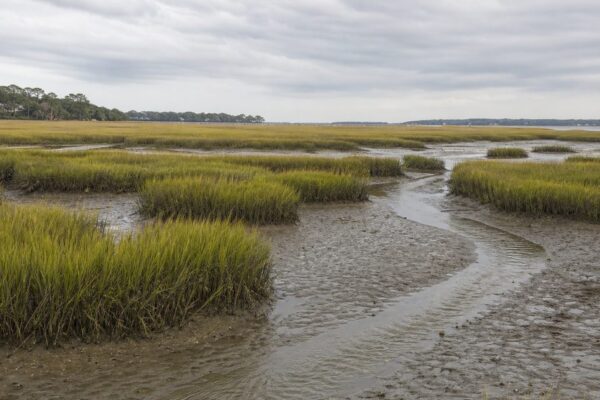
Amelia Island sits near the mouth of the St. Marys River, close to the Georgia line, facing the Atlantic. That made it a hinge between Spanish Florida and the Anglo-American world to the north. It was a frontier in military terms, a customs frontier in economic terms, and often a legal gray zone in practice. A government could claim it in a treaty. Holding it was another matter.
A weak garrison, a sympathetic merchant network, and a useful harbor could turn imperial law into a suggestion. That is why the strangest flag episodes all cluster in the early 19th century, when Spain’s power in the region was fraying and the United States had not yet fully absorbed Florida.
The Patriot flag and a staged independence
In 1812, a group known as the Patriots of Amelia Island, backed by the United States, seized the island from Spain. This is one of the murkier chapters, because formal sovereignty and actual control split apart.
On March 17, the Patriot flag of the so-called Republic of Florida was raised. The next day, March 18, the U.S. flag replaced it. The sequence was brief and highly political. The language of independence masked a larger American aim: pressure Spain, create facts on the ground, and ease Florida toward annexation.
By early 1813, U.S. troops had withdrawn and Spain resumed control. Accounts differ on the exact duration of some of these flag changes, but the broader point is firm. Amelia Island had become a place where authority could be improvised in public. Raise a banner, gather armed support, invoke a cause, and for a moment the claim might hold.
Spain tried to answer with fortification. In 1816, it completed a new Fort San Carlos at Fernandina. The logic was simple. If the harbor kept inviting challengers, the harbor needed guns.
Gregor MacGregor, Luis Aury, and the island at its most unstable
The fort did not solve the problem. In 1817, the Scottish adventurer Sir Gregor MacGregor captured the island with a force said to number just 55 men. He raised the Green Cross of Florida flag and announced a new political future in the grand style common to private military schemes of the era.
The small size of his force is the revealing detail. A strategic island should not have been so easy to take. That it was tells you how thin Spanish control had become.
MacGregor’s project collapsed almost as quickly as it appeared. He left on September 4, 1817, abandoning his position to a small garrison. Into that vacuum stepped Luis Aury, a French-born privateer often described in older accounts as a pirate. Aury claimed the island in the name of the Republic of Mexico and raised what is usually called the Mexican Rebel flag.
This was Amelia Island at its most chaotic: not simply contested by empires, but used by freelance revolutionaries, privateers, and smugglers who understood the value of a harbor better than any diplomat did. The island had become a maritime loophole large enough to embarrass governments.
In December 1817, U.S. forces occupied the island and ended Aury’s venture. Washington’s motive was practical. It wanted order on the coast and fewer semi-legal operations flourishing just offshore.
American control, then one last interruption
In 1821, the United States formally acquired Florida from Spain. This was the transfer that lasted. After centuries of unstable rule, Amelia Island entered the American period for good, or nearly so.
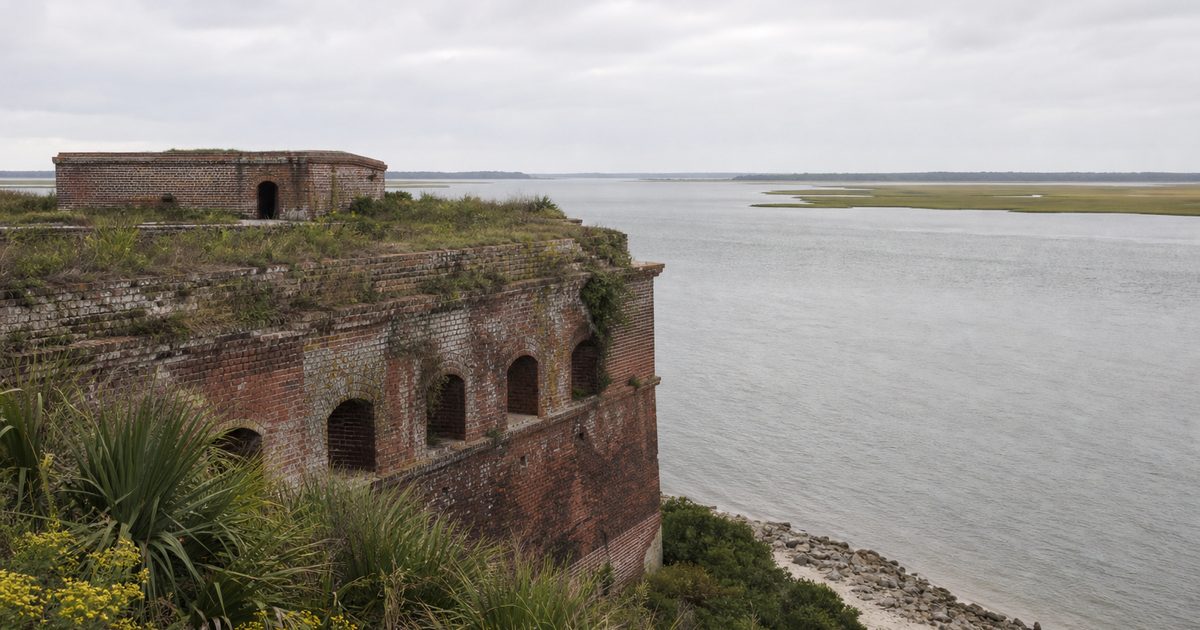
The exception came with secession. On January 8, 1861, Confederate forces took Fort Clinch, and the Confederate flag became the eighth in the island’s sequence. Again, the fort and harbor were the real story. Whoever held the northern tip could watch the inlet and command the approach.
That Confederate hold was brief. In March 1862, Confederate troops abandoned Fort Clinch, and Federal forces reoccupied it that same month, restoring U.S. control.
One later detail is often repeated: Amelia Island remained the last Spanish-speaking settlement on the Atlantic coast north of St. Augustine well into the 19th century. However phrased, the larger truth is clear enough. Even after sovereignty settled, the island still carried the residue of an older Atlantic border world.
What the eight flags actually mean
The famous count matters less than the pattern behind it. Amelia Island flew eight flags because it sat where several systems overlapped and failed at once: empire, trade, military defense, and border enforcement.
French and Spanish claims belonged to the first age of European rivalry in Florida. British and second Spanish rule reflected the treaty-making world of the 18th century. The Patriot, Green Cross, and Mexican Rebel flags belonged to a messier era, when imperial decline, revolutionary politics, and opportunism blurred into one another. The Confederate flag marked a final rupture inside the United States itself.
Seen that way, the island’s history is not a parade of banners. It is a study in how coastal geography can keep a place unstable for centuries. A deep harbor on a contested edge invited every kind of claimant: crown officials, missionaries, raiders, settlers, slave traders, privateers, and national armies.
That is why the phrase Amelia Island eight flags still endures. It compresses a long borderland history into a memorable count. The risk is that the count turns the past into trivia. The reality was bloodier, more improvised, and more revealing about the making of the American South.
Where the story is still visible
The clearest surviving site is Fort Clinch at the island’s northern end. The brick fort belongs to a later phase of the story, but its presence explains the whole island. Defend the inlet, defend the harbor, defend the border. That logic did not change, even when the flags did.
Old Town Fernandina preserves the ground where earlier settlement and Fort San Carlos once stood. The Amelia Island Museum of History keeps the eight-flags narrative alive, though the best way to read the island is not as a collection of separate episodes. It is one long argument over the same piece of coast.
Even the later landscape reflects that continuity. The Amelia Island Lighthouse, built in 1838, belongs to the American era, yet it speaks to the same maritime setting that made the island worth fighting over in the first place. Fernandina Beach, with its preserved historic core, gives the island a visible past rather than a fully erased one.
FAQ
Why did Amelia Island have 8 flags?
Because its harbor and position near the Florida-Georgia border made it valuable to rival empires, insurgents, privateers, and later the United States and Confederacy.
What are the 8 flags of Amelia Island?
French, Spanish, British, Patriot, Green Cross of Florida, Mexican Rebel, United States, and Confederate.
Is Amelia Island really the only place in the U.S. with eight flags?
That claim is widely used in local history and tourism. It refers to this specific sequence of eight different flags raised over the island.
Why was Amelia Island important?
Its deep natural harbor and border location made it strategically useful for shipping, defense, smuggling, and military control.
What historic site best explains Amelia Island history?
Fort Clinch does. It shows why the island mattered: control the fort, and you control the inlet and harbor.